Novelty, Replacement, or Misrepresentation? Mapping the Murky Middle of America's Document Trade
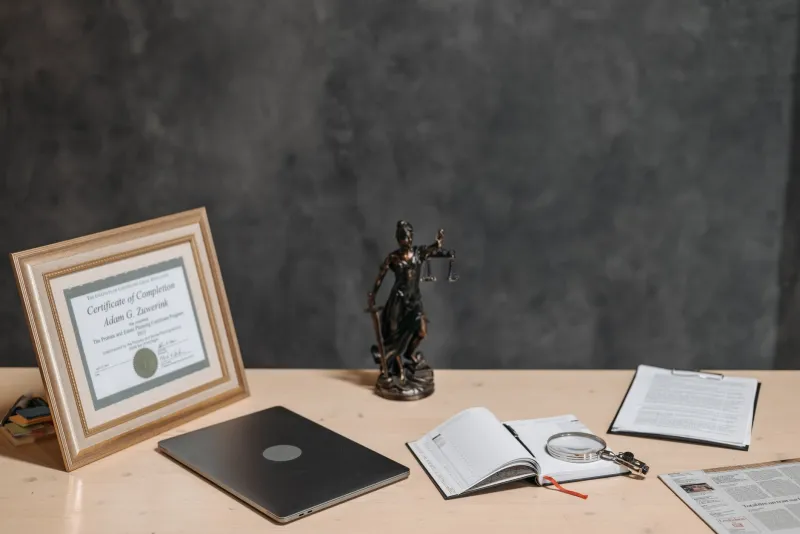
Ask ten Americans whether buying a 'fake diploma' is illegal, and you will likely receive ten confident answers—half of them wrong in one direction, half in the other. The reality is considerably less tidy than either camp assumes. The trade in replica certificates, replacement diplomas, and unofficial copies occupies one of the strangest zones in American commerce: an industry that is largely lawful to operate, largely lawful to purchase from, and yet capable of landing a buyer in genuine criminal jeopardy the moment a document leaves the wall and enters a transaction.
Understanding where the line actually sits requires separating three things the public tends to blur together: what the document is, what the buyer does with it, and what the buyer claims about it.
The Document Itself Is Rarely the Crime
Under federal law, producing a convincing replica of a diploma, a replacement certificate, or an unofficial copy of a transcript is, in most circumstances, not a criminal act. Diploma mills and novelty printers operate openly, some with disclaimers stating their products are intended 'for novelty, replacement, or personal records purposes only.' The First Amendment casts a long shadow here, and courts have historically been reluctant to criminalize the printing of paper that merely resembles an official credential.
There are exceptions worth noting. Documents that replicate federal government credentials—certain seals, military discharge papers, or federal agency identification—can trigger statutes such as those governing forgery of government obligations. Reproducing a notary seal, a state-issued professional license layout in some jurisdictions, or an official government emblem can cross from novelty into counterfeiting territory. But a replica of a private university diploma, sitting alone in a frame, is not contraband.
This is the first misconception the gray market rests upon: many buyers assume the purchase itself is the offense. It almost never is.
Use Is Where Liability Begins
The legal exposure almost always attaches at the point of use. A replica document displayed in a private space—a dorm wall, a personal archive, a replacement for a lost original while awaiting a registrar's reissue—is inert. The same document submitted to an employer, a licensing board, an immigration authority, or a lender is something else entirely.
Several bodies of law converge at that moment:
- Fraud statutes. Presenting a fake credential to obtain employment, promotion, or compensation can constitute fraud under state law, and wire or mail fraud at the federal level if the application crossed state lines or used interstate communications—which, in the era of online applications, it nearly always does.
- Licensing and professional regulation. Nurses, engineers, teachers, real estate agents, and contractors who submit falsified credentials face not only fraud exposure but revocation, industry blacklisting, and in licensed professions, potential criminal referral.
- Federal program fraud. Using a fabricated credential to qualify for federal benefits, government contracts, or student aid elevates the matter considerably.
The pattern is consistent: the paper is legal, the representation is not. A buyer who tells an employer 'this is my degree' has made a false statement of material fact. A buyer who never makes that claim has not.
The Ethical Terrain Is Steeper Than the Legal One
Even where the law is silent, the ethics are not. Consider the gray cases that sit between the clearly harmless and the clearly criminal:
A professional displays a replica of a degree they genuinely earned, because the original was destroyed in a house fire and the university's replacement process takes months. Legally unremarkable, arguably even reasonable—so long as no one is misled about its status as a duplicate.
A job seeker lists a credential on a résumé they never completed but purchased a certificate to 'back up.' This is not a gray case at all; it is résumé fraud, and it is prosecuted more often than most people realize, particularly in healthcare and finance.
A family orders a commemorative certificate styled after a diploma as a gift or a prop. Harmless, provided it never masquerades as an academic record.
The common thread in every defensible use is transparency. The moment a replica is passed off as an original—whether explicitly or by convenient silence—the buyer has moved from the novelty market into misrepresentation, regardless of what the vendor's disclaimer says.
Why the Boundaries Feel Murkier Than They Are
Part of the confusion is structural. Vendors in this space market their products with imagery of graduation caps and professional success, then insulate themselves with fine-print disclaimers. The marketing implies one use; the disclaimer forbids it. Buyers, understandably, take their cues from the former.
Employment verification practices add to the muddle. Many American employers, particularly smaller ones, never verify credentials beyond a cursory glance, which creates the impression that detection is unlikely. That impression is increasingly outdated. National background-check firms, degree clearinghouses, and registrar databases have made verification fast and cheap, and high-turnover industries audit credentials more rigorously than ever. The falsified MBA that went unnoticed in 1995 is a liability today.
A Practical Framework
For anyone weighing a purchase in this space, the honest calculus reduces to three questions:
- Will anyone be told or led to believe this is an original? If yes, stop.
- Does the document replicate a government seal, license, or federal credential? If yes, the legal risk begins earlier than you think.
- Is there a legitimate alternative—a registrar reissue, a notarized copy, a verification letter? There almost always is, and it is cheaper than the consequences.
The gray market is not, despite its reputation, a marketplace of crime. It is a marketplace of context. The paper is neutral; the claim attached to it is everything. Buyers who understand that distinction navigate this space without incident. Buyers who do not tend to learn the difference from an investigator rather than an editorial.